Understanding the Accounting Equation and Formula

It’s not treated as an expense because it’s not a cost of running the business, it’s a reduction in ownership interest. This transaction reflects the cost of doing business, and although it reduces the company’s profit (and by extension, equity), it doesn’t touch liabilities. Even though one asset decreased and another increased, the total value of assets remains the same, and the books are still balanced. From your point of view as the accountant, this transaction shows the movement within the asset section. You don’t just memorize the accounting equation; you apply it every time a transaction takes place. Let’s walk through some simple examples to see how the equation works in common scenarios.

THE RELATIVE IMPORTANCE OF LIABILITIES, CONTRIBUTED CAPITAL, AND EARNED CAPITAL
The accounting equation shows how a company’s assets, liabilities, and equity are related and how a change in one results in a change to another. In the basic accounting equation, assets are equal to liabilities plus equity. By understanding the relationship between assets, liabilities, and equity, companies can maintain transparency, accuracy, and accountability in their financial operations. The accounting equation uses total assets, total liabilities, and total equity in the calculation.
- Revenues are the inflows of resources from the company’s primary activities, while expenses are the outflows incurred to generate those revenues.
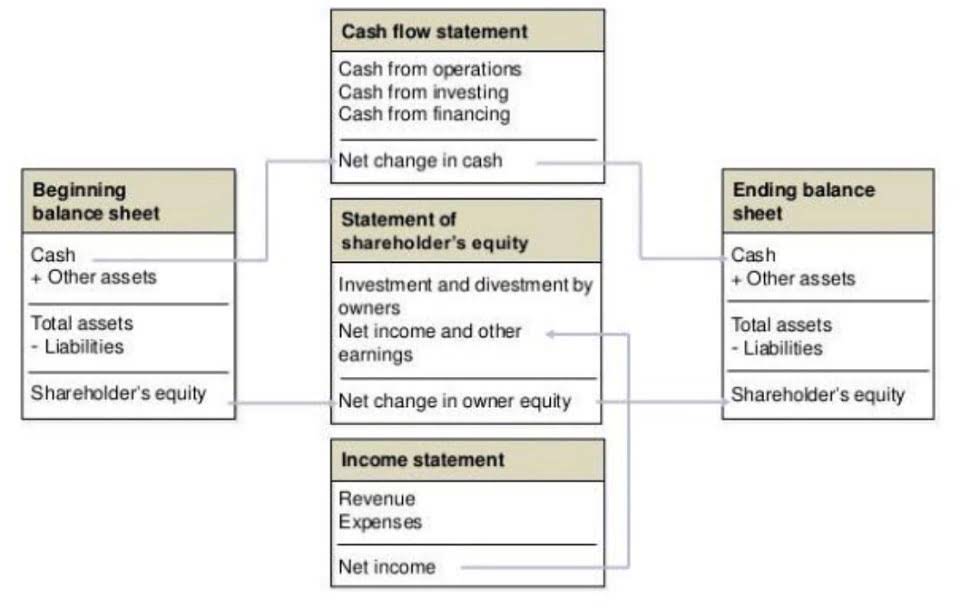
- Not only does the balance sheet reflect the basic accounting equation as implemented, but also the income statement.
- Under the accrual basis of accounting, revenues are recorded at the time of delivering the service or the merchandise, even if cash is not received at the time of delivery.
- In straightforward terms, the accounting equation states that assets always equal liability plus equity.
- The company must analyze each event to determine whether or not it has an effect on the variables that make up the accounting equation.
Corporation Transaction C4.

Here we can see the list of all assets that have been reported on Hershey company balance sheet for 2023. Now, suppose the owner also borrows $5,000 from the bank, which is then deposited into their account. Additionally, you can visualize the accounting equation and its components using advanced visualization tools like Tableau. Members of an LLC contribute equity, usually in the form of initial investments. This equity becomes a part of the equity component of the accounting equation. As mentioned above, the accounting equation is based on the principle of the double-entry accounting Liability Accounts system.
- The accounting equation is a model that states a company’s total assets are equal to the sum of total liability and shareholders’ equity.
- This section explores the factors that lead to changes in the accounting equation and how these changes are analyzed.
- Accounting professionals record the economic activities of a business as transactions (business transactions).
- As you see, ACI’s assets increased and its liabilities increased by $7,000.
- When a company buys an asset, for example, the asset account on the balance sheet increases, while the cash account decreases.
Examples of assets
- As you can see, shareholder’s equity is the remainder after liabilities have been subtracted from assets.
- Other examples include (1) the allowance for doubtful accounts, (2) discount on bonds payable, (3) sales returns and allowances, and (4) sales discounts.
- As time progresses and you make payments on the mortgage, your equity increases.
- Liabilities are nothing but the debt or financial obligation a business owns from other parties.
- Whatever happens, the transaction will always result in the accounting equation balancing.
- For instance, if a home costs \$150,000 and you make a down payment of \$30,000, the remaining amount is financed through a mortgage.
Acting as the cornerstone for financial statements, it holds the key in enabling us to understand the financial health of an organization. This simple example highlights the real-world application of the basic accounting equation in safeguarding a business’s financial health. Another issue with the accounting equation is a lack of proper exposure to data that leads to investors interpreting the company’s performance. This also prompts potential investors to find out whether the company has enough assets and liabilities to perform well in the future or not. It does not account for intangible assets or the complexities of modern financial transactions. Liabilities refer to the obligations that a company owes to others and are expected to be settled in the future.
Sole Proprietorship Transaction #2.
It helps in determining the resources the company owns (current assets), the obligations it owes to others (liabilities), and the amount of money that belongs to the owners (equity). By keeping track of these elements, businesses can make informed decisions about their finances, plan for the future, and assess their financial health. You can understand the significance of the accounting equation from the fact that financial statements like balance sheets are entirely based on this model.
This section explores how individuals and companies can use the accounting equation to manage their finances more effectively. Even with the limitations, the accounting equation still turned out to be the best model introduced for accounting for businesses. You can also check the balance of your business using the accounting equation. The accounting equation is a vital concept in accounting, underpinning financial reporting and analysis.

It’s comprehensive accounting software that helps businesses maintain balanced books – without manual calculations or extensive accounting knowledge. You’re not just bringing in cash, you’re increasing the business’s value. Revenue doesn’t go into a “revenue” account in the equation itself; it flows into equity, typically through retained earnings. Here we see that the sum of liabilities and equity equals the total assets and the equation balances. Any discrepancies between recorded assets and the sum of equity and liabilities signal an anomaly and a need for corrections in account balances. The brilliance of the double-entry system lies in its self-balancing mechanism, acting as a check-and-balance system to reduce errors and uphold financial data integrity.
The accounting equation is so fundamental to accounting that it’s often the first concept taught in fundamental accounting equation entry-level courses. It offers a quick, no-frills answer to keeping your assets versus liabilities in balance. As you can see, assets equal the sum of liabilities and owner’s equity.
And if you need a professional way to handle invoices, the Tofu Invoicing App offers a clean, mobile solution for creating and sending invoices on the go. This equation will always remain balanced, meaning any change in one component affects another. It reflects the double-entry accounting system, where every transaction has equal and opposite effects to maintain accuracy. By mastering the accounting equation, businesses can make informed financial decisions, ensure accurate record-keeping, and build trust with stakeholders. For example, in mergers, companies acquire both tangible and intangible assets, which are difficult to quantify within the confines of the accounting equation. With contingent liabilities such as future legal claims, the situation gets more complicated as these are not easily reflected.
The amount posted from the ledger accounts to the balance sheet is recorded at their historical amount, which means that inflation or reduction in the value of assets is neglected. This leads to a misrepresentation of the financial health normal balance of the company. For new businesses, the accounting equation is an essential tool for keeping track of their financial position. By monitoring their assets, liabilities, and equity, new businesses can make informed decisions about how to allocate their resources and grow their business.
NextPrev